

Understanding Skin Cancer Types Symptoms and Effective Prevention Strategies
- Bianca Camille Fong

- Dec 13, 2025
- 4 min read
Skin cancer is one of the most common cancers worldwide, yet many people remain unaware of its different types, symptoms, and how to prevent it effectively. Early detection and prevention can save lives, making it crucial to understand what to look for and how to protect your skin. This article explores the main types of skin cancer, their symptoms, and practical prevention strategies to help you stay informed and safe.
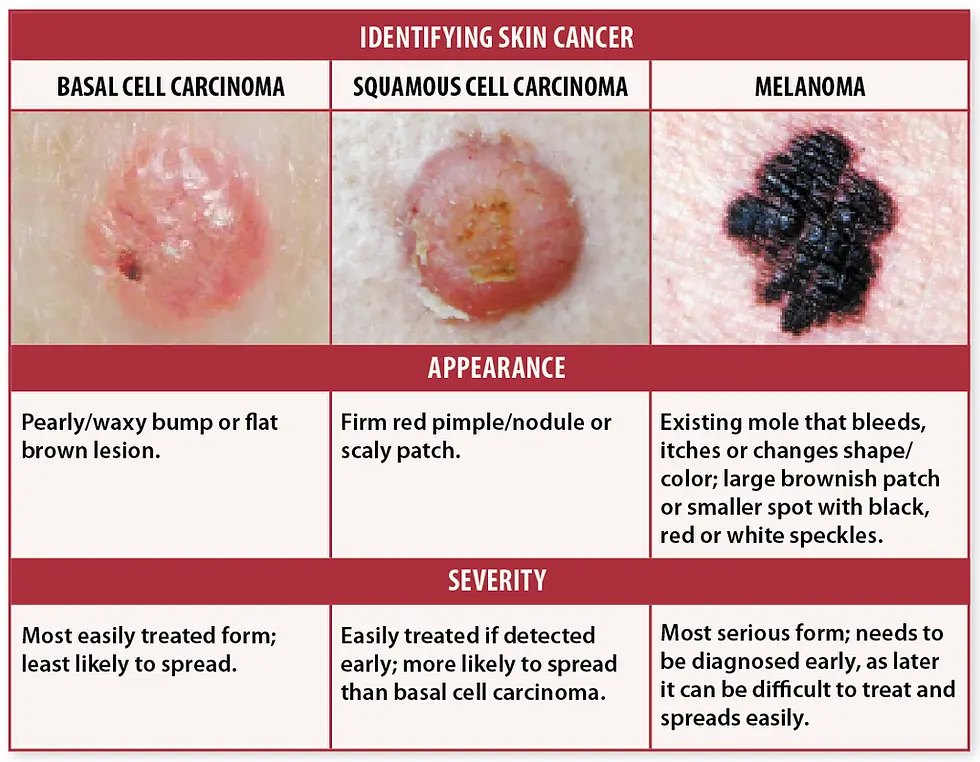
Types of Skin Cancer
Skin cancer primarily develops when skin cells grow uncontrollably due to DNA damage, often caused by ultraviolet (UV) radiation from the sun or tanning beds. There are three main types of skin cancer:
1. Basal Cell Carcinoma (BCC)
Basal cell carcinoma is the most common type of skin cancer. It originates in the basal cells, which are found at the bottom of the epidermis (the outer skin layer). BCC usually grows slowly and rarely spreads to other parts of the body, but it can cause significant local damage if untreated.
Common features of BCC:
Pearly or waxy bump on the skin
Flat, flesh-colored or brown scar-like lesion
Open sore that bleeds or crusts and doesn’t heal
BCC often appears on sun-exposed areas such as the face, neck, and arms.
2. Squamous Cell Carcinoma (SCC)
Squamous cell carcinoma arises from squamous cells, which make up most of the skin’s upper layers. SCC is more aggressive than BCC and can spread to other parts of the body if not treated early.
Signs of SCC include:
Firm, red nodule or bump
Rough, scaly patch on the skin that may crust or bleed
Non-healing sore or ulcer
SCC commonly develops on sun-exposed areas like the ears, face, lips, and hands.
3. Melanoma
Melanoma is the most dangerous form of skin cancer. It develops in melanocytes, the cells responsible for producing skin pigment. Melanoma can spread quickly to other organs if not caught early.
Warning signs of melanoma:
A new mole or growth, or a change in an existing mole
Irregular, asymmetrical shape with uneven borders
Multiple colors such as black, brown, tan, red, or blue
Diameter larger than 6 millimeters (about the size of a pencil eraser)
Itching, tenderness, or bleeding in the mole
Melanoma can appear anywhere on the body, including areas not exposed to the sun.
Symptoms to Watch For
Recognizing skin cancer symptoms early improves treatment success. Here are some key symptoms to monitor:
New growths or sores that don’t heal within a few weeks
Changes in size, shape, or color of existing moles or spots
Redness or swelling beyond the border of a mole
Itching, tenderness, or pain in a spot on the skin
Scaly, rough patches that may bleed or crust
Use the ABCDE rule to evaluate moles for melanoma:
Asymmetry: One half doesn’t match the other
Border: Edges are irregular or blurred
Color: Multiple or uneven colors
Diameter: Larger than 6 mm
Evolving: Changes over time
If you notice any of these signs, consult a healthcare professional promptly.
Effective Prevention Strategies
Preventing skin cancer involves protecting your skin from harmful UV radiation and adopting healthy habits. Here are practical steps to reduce your risk:
Limit Sun Exposure
Avoid direct sunlight between 10 a.m. and 4 p.m., when UV rays are strongest.
Seek shade whenever possible, especially during peak hours.
Use Sunscreen Properly
Choose a broad-spectrum sunscreen with SPF 30 or higher.
Apply generously on all exposed skin 15 minutes before going outside.
Reapply every two hours, or more often if swimming or sweating.
Wear Protective Clothing
Long-sleeved shirts, long pants, and wide-brimmed hats shield your skin.
Sunglasses with UV protection safeguard your eyes and surrounding skin.
Avoid Tanning Beds
Tanning beds emit UV radiation that increases skin cancer risk.
Opt for sunless tanning products if you want a tanned look.
Regular Skin Checks
Perform monthly self-examinations to spot new or changing moles.
Schedule annual skin exams with a dermatologist, especially if you have risk factors.
Healthy Lifestyle Choices
Maintain a balanced diet rich in antioxidants, which may support skin health.
Avoid smoking, as it can increase the risk of squamous cell carcinoma.
Common Questions About Skin Cancer
Can skin cancer develop on areas not exposed to the sun?
Yes, melanoma and other skin cancers can appear on less exposed areas such as the soles of the feet, under nails, or the genital area. This is why full-body skin checks are important.
Who is at higher risk for skin cancer?
Risk factors include:
Fair skin that burns easily
History of sunburns or excessive sun exposure
Family or personal history of skin cancer
Presence of many moles or unusual moles
Weakened immune system
How is skin cancer diagnosed?
Doctors usually perform a skin exam and may take a biopsy of suspicious lesions. The tissue is examined under a microscope to confirm the diagnosis.
What treatments are available?
Treatment depends on the type, size, and location of the cancer. Options include surgical removal, topical medications, radiation therapy, and in advanced cases, immunotherapy or chemotherapy.
Taking Action to Protect Your Skin
Understanding skin cancer types and symptoms empowers you to take control of your skin health. Prevention is the best defense, but early detection is key to successful treatment. Make sun safety a daily habit, perform regular skin checks, and consult a healthcare provider if you notice any suspicious changes.


Comments